Skip to main content Skip to main navigation
Stanford University School of Education Home
  • SUSE Directory
  • Library
  • AXESS
  • Make a Gift
  • Stanford Home
  • About SUSE
  • Admissions
  • Academics
  • Faculty & Research
  • News & Events
  • Knowledge at Work
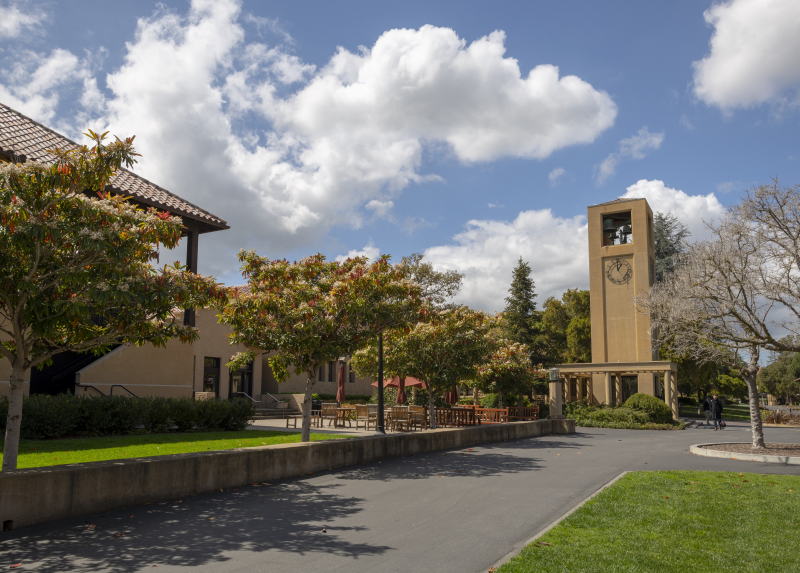
Photo of campus architecture
Home » Faculty & Research » Faculty Profiles » Barron, Brigid

Barron, Brigid

Academic Title

Associate Professor

Contact Info

Phone: 
(650) 725-0194
Email: 
barronbj@stanford.edu
Office Location: 
CE 240
Personal Webpage: 
http://youthlab.stanford.edu/

Admin. Support

Lauren Ellison

Program Affiliations

DAPS
SHIPS (MA): LDT
Brigid Barron

Research

Research Summary: 

Dr. Barron is a developmental psychologist who studies processes of collaborative learning in and out of school. She studies how individuals work together to create joint products and how what is learned and created is related to the quality of their interactions. In a five year NSF supported CAREER award she documented adolescents' learning ecologies (e.g. learning opportunities across home, school, libraries, virtual communities, clubs, camps) for technological fluency development across diverse communities in the Silicon Valley region with the goal of understanding how to design more equitable opportunities for learning. She co-leads the LIFE center (Learning in Informal and Formal Environments), funded by the National Science Foundation in 2005. Barron is PI for a grant funded by the MacArthur Foundation that will follow students longitudinally as they participate in programs designed to develop their technological fluency through activities such as game design, robotics, and digital movie making. The theoretical goal of this work is to articulate conditions that lead to the diversification of a child's learning ecology through increasing activity in learning activities across settings.

Current Research: 

Processes and products of collaboration in the context of inquiry-based learning environments, learning through project-based computer curriculum, design and assessment of community technology centers, family engagement in computing activities.

Research Interests: 
Family Issues
Access and Equity
School as a Context of Human Development
Small Group Instruction and Interaction
Community/Youth Development and Organizations
Design Experiments
Technology in Teaching and Learning
Equity in the Development of Technological Fluency

Quote

"Typically, the main functions of classroom assessment have been to assign grades and document the achievement of basic skills as mandated by state regulations. . . . New assessment standards are geared toward encouraging teachers to use assessments formatively in the context of instruction to facilitate instructional decision making and promote self assessment by students."

- from "A SMART Model of New Standards and Assessments in Mathematics" (coauthored)

Education

  • PhD (Clinical and Developmental Psychology), Vanderbilt University, 1992
  • MA (Psychology), Vanderbilt University, 1989
  • BS (Psychology), University of California at Santa Cruz , 1984

Time at Stanford

Since 1996:

Classes include Doctoral Seminar in Social Processes in Learning and Development; Child Development in the Context of School.

Professional Experience

Senior Research Associate, Learning Technology Center, Vanderbilt University (1992-1995)

Instructor, Peabody College, Vanderbilt University (1992-1993)

Intern in Child Clinical Psychology, University of Washington (1991-1992)

Courses Taught

  • Qualitative Research Methods (350b)
  • Child Development and Schooling (344)
  • Social Processes in Learning and Development (372)

Recent Publications

Barron, B., Martin, C. K., Takeuchi, L., & Fithian, R. (2009). Parents as learning partners in the development of technological fluency. The International Journal of Learning and Media, 1, 55-77.

Barron, B., Walter, S., Martin, C. K., & Schatz, C. (2009). Predictors of creative computing participation and profiles of experience in two Silicon Valley middle schools. Computers and Education. doi:10.1016/j.compedu.2009.07.017

Barron. B.  (2006).  Interest and self-sustained learning as catalysts of development:  A learning ecologies perspective. Human Development, 49, 193-224.

Barron, B. (2004).  Learning ecologies for technological fluency: Gender and experience differences. Journal of Educational Computing Research, 31(1), 1-36.

Barron, B. (2003). When smart groups fail. The Journal of the Learning Sciences, 12, 307-359.

Current Activities


Editorial Board Member, Journal of the Learning Sciences (from 11/2003)

Faculty & Research

  • Faculty Profiles
  • Faculty Research Interests
  • Faculty Centers
  • SUSE Faculty Open Positions
  • SUSE Open Archive
  • Proposal and Research Resources
  • Resources for Faculty
  • Login
Stanford University School of Education
485 Lasuen Mall, Stanford, CA 94305-3096
Tel: (650) 723-2109
Copyright 2012 Stanford University.
All rights reserved. Terms of use | Copyright Complaints
  • Site Map
  • Contact Us
  • HelpSU
  • SUSE IT
  • AXESS
  • Academic Calendar
  • Stanford Bulletin
  • Office of the Registrar
  • EDmail
  • StanfordWho
  • StanfordYou
  • Login
Connect with us on Facebook Connect with us on Twitter Connect with us on YouTube Connect with us on Flickr

Make a gift now