Skip to main content Skip to main navigation
Stanford University School of Education Home
  • SUSE Directory
  • Library
  • AXESS
  • Make a Gift
  • Stanford Home
  • About SUSE
  • Admissions
  • Academics
  • Faculty & Research
  • News & Events
  • Knowledge at Work
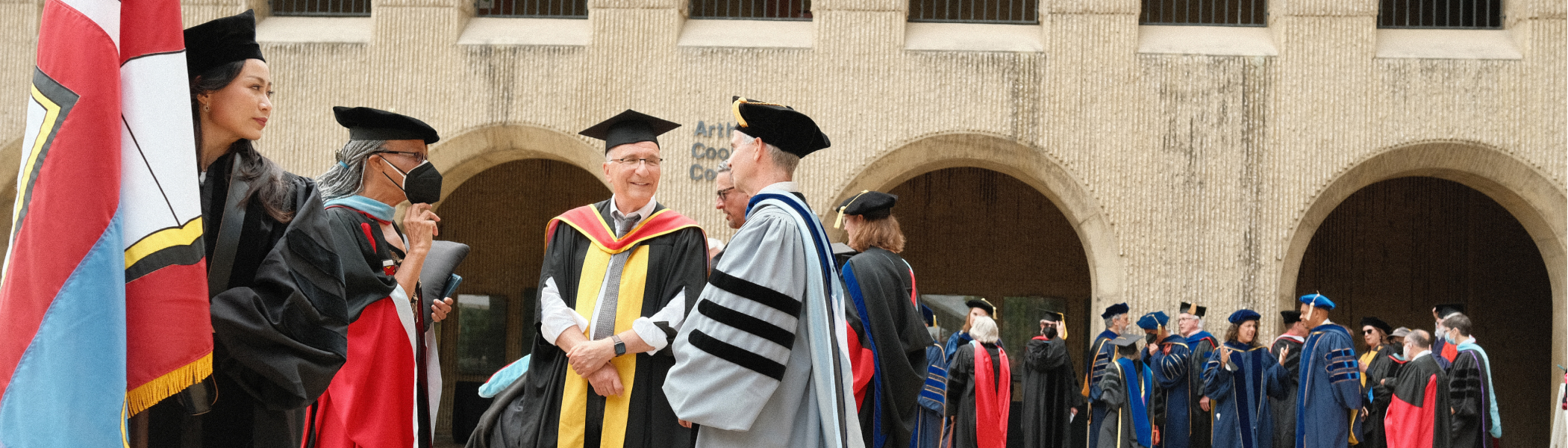
Photo of campus architecture
Home » Faculty & Research » Faculty Profiles » Juel, Connie

Juel, Connie

Academic Title

Professor

Contact Info

Phone: 
(650) 724-5281
Email: 
cjuel@stanford.edu
Office Location: 
CU 219

Admin. Support

Annie Craft-Kincheon

Program Affiliations

CTE: Literacy, Language, and English Education
Connie Juel

Research

Research Summary: 

Connie Juel's research centers on literacy acquisition, especially as it is affected by school instruction. She is noted for both her longitudinal research on reading development, often following children across multiple school years, and her work on interventions to help struggling readers. She was awarded the National Reading Conference's Oscar Causey Award for outstanding contributions to reading research (2002) and was elected to the Reading Hall of Fame by the International Reading Association (2001).

Current Research: 

Effects of early elementary school instruction, and specific interventions, on literacy and language growth.

Longitudinal study of literacy development from preschool through first grade. Focus on classroom factors in 13 kindergarten and 13 first grade classrooms that affect growth across the years in children with different entering skill and language profiles.

Research Interests: 
Ability Grouping
Reading Disabilities
Reading Instruction
Language
Classroom Dynamics
Cognitive Development
Cognitive Psychology
Literacy
Literacy and Culture
Curriculum and Instruction
Early Childhood Education
Elementary Education

Quote

"In observing classroom instruction in 13 kindergarten and 13 first-grade classrooms we found some classrooms in which over 60% of language arts activities focused exclusively on letter-sounds, with little, if any, reference to the meanings of the words being decoded (Juel, et al., 2003). That is a serious problem for at least two reasons. First, phonics, or sounding-out words, is based on the assumption that children know the meanings of the words they are decoding. Phonics only works if the string of produced letter-sounds approximates a recognizable word. In too many cases, that assumption is being violated. Second, such large amounts of time spent on letters-sounds means less time on developing oral vocabulary and knowledge. Development of oral vocabulary is a serious problem."

-from Juel, C. (2006). The impact of early school experiences on initial reading. In S. Neuman & D. Dickinson (Eds.) Handbook of early literacy research, Vol. 2. (pp. 410-426). New York: Guilford.

Education

  • PhD (Educational Psychology), Stanford
  • MA (Curriculum and Instruction), Stanford
  • California Standard Life Teaching Credential, College of Notre Dame
  • BA (Spanish), Stanford

Time at Stanford

Since 2003

Professional Experience

Professor, Harvard Graduate School of Education, Human Development and Psychology, Language and Literacy, and Director of the Jeanne Chall Reading Lab, 1999-2003;

Thomas G. Jewell Eminent Scholar Professor of Education, University of Virginia, 1991-1999;

Assistant Professor to Professor, Joint Appointment in Curriculum and Instruction and Educational Psychology, University of Texas at Austin, 1978-1991;

Assistant Professor, Educational Psychology, University of Idaho, 1977-1978;

Elementary School Teacher, Redwood City, California, 1970-1973

Courses Taught

  • Tutoring: Seeing a child through literacy, (EDUC 103a/203a)
    http://studentaffairs.stanford.edu/haas/ravenswoodreads
  • Becoming Literate in School I, II, III (STEP 228E, 228F, 228G)
  • Literacy Development and Instruction (EDUC 258)

Recent Publications

Graves, M., Juel, C., & Graves, B., Dewitz, P.  (2011). Teaching reading in the 21st Century (5th ed.). Boston, MA: Allyn & Bacon.

Juel, C. (2010). Taking a long view of reading development. In M. McKeown & L. Kucan (Eds.), Bringing Reading Research to Life (pp. 11-32). New York: Guilford.

Juel, C., Hebard, H., Park-Haubner, J., & Moran, M. (2010).  Reading through a disciplinary lens.  Educational Leadership, 67, 13-17.

Johnston, F. R., Invernizzi, M., Juel, C., & Lewis-Winston, D. (2009). Book buddies: A tutoring framework for struggling readers (2nd ed.). New York: Guilford.

Juel, C. (2006). The impact of early school experiences on initial reading. In D. K. Dickinson & S. B. Neuman ( Eds.), Handbook of early literacy research, Vol. 2. (pp. 410-426). New York: Guilford.

Snow, C. & Juel, C. (2005). Teaching children to read: What do we know about how to do it? In M. Snowling, & C. Hulme (Eds.), The science of reading (pp. 501-520). Oxford: Blackwell.

Juel, C., & Minden-Cupp (2004, 2000). Learning to read words: Linguistic units and instructional strategies. Reading Research Quarterly, 35, 458-492. (Reprinted in R. Ruddell & N. Unrau (Eds.). Theoretical models and processeses of reading, 5th edition).

Juel, C. & Deffes, R. (2004). Making words stick. Educational Leadership, 61, 30-34.

Konold, T. R., Juel, C., McKinnon, M., & Deffes, R. (2003). A multivariate model of early reading acquisition. Applied Psycholinguistics, 24, 89-112.

Juel, C., Biancarosa, G., Coker, D., & Deffes. R. (2003). Walking with Rosie: A cautionary tale of early reading instruction. Educational Leadership, 60, 12-18.

Current Activities

Faculty Director, Haas Center for Public Service: Ravenswood Reads, http://studentaffairs.stanford.edu/haas/ravenswoodreads

Member, Editorial Board, Reading Research Quarterly

National Advisory Board, Language and Literacy Series, Teachers College Press

Advisor, Sesame Workshop, The New Electric Company, on PBS

Faculty & Research

  • Faculty Profiles
  • Faculty Research Interests
  • Faculty Centers
  • SUSE Faculty Open Positions
  • SUSE Open Archive
  • Proposal and Research Resources
  • Resources for Faculty
  • Login
Stanford University School of Education
485 Lasuen Mall, Stanford, CA 94305-3096
Tel: (650) 723-2109
Copyright 2012 Stanford University.
All rights reserved. Terms of use | Copyright Complaints
  • Site Map
  • Contact Us
  • HelpSU
  • SUSE IT
  • AXESS
  • Academic Calendar
  • Stanford Bulletin
  • Office of the Registrar
  • EDmail
  • StanfordWho
  • StanfordYou
  • Login
Connect with us on Facebook Connect with us on Twitter Connect with us on YouTube Connect with us on Flickr

Make a gift now