
Skip to main content Skip to main navigation
Stanford University School of Education Home
  • SUSE Directory
  • Library
  • AXESS
  • Make a Gift
  • Stanford Home
  • About SUSE
  • Admissions
  • Academics
  • Faculty & Research
  • News & Events
  • Knowledge at Work
Photo of campus architecture
Home » Faculty & Research » Faculty Profiles » Osborne, Jonathan

Osborne, Jonathan

Academic Title

Professor

Other Titles

The Shriram Family Professorship in Science Education

Contact Info

Phone: 
(650) 725-1247
Email: 
osbornej@stanford.edu
Office Location: 
CU 222
Personal Webpage: 
http://stanford.edu/group/ideas/cgi-bin/drupal/argumentation

Admin. Support

Eric MacDonell

Program Affiliations

CTE: Science Education
CTE: MA
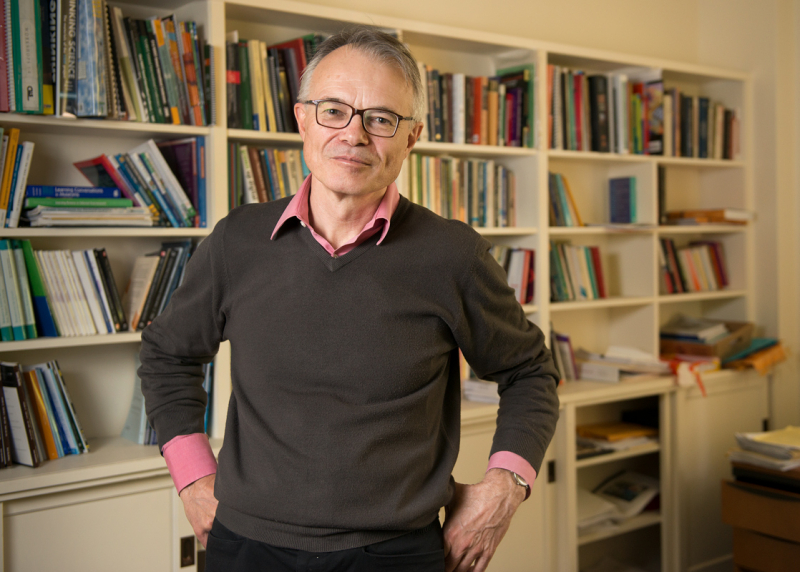
Jonathan Osborne

Research

Research Summary: 

My research focus is a mix of work on policy and pedagogy in the teaching and learning of science. In the policy domain, I am interested in exploring students' attitudes to science and how school science can be made more worthwhile and engaging - particularly for those who will not continue with the study of science. In pedagogy, my focus has been on making the case for the role of argumentation in science education both as a means of improving the use of a more dialogic approach to teaching science and improving student understanding of the nature of scientific inquiry. I have led one major project on 'Enhancing the Quality of Argument in School Science Education'. From this we developed the IDEAS (Ideas, Evidence and Argument in Science Education) materials to support teacher professional learning. Nevertheless, much science, if not more, is learned outside the classroom and how young people learn in that environment and what it has to offer formal education is another focus of my work and I was one of the partners in the NSF funded Centre for Informal Learning and Schools (2002-7)

Current Research: 

Catalyzing Comprehension through Discussion and Debate

This project is a collaboration with Catherine Snow, and a research team from Harvard and with the Strategic Education Research Partnerships (SERP) group to understand, measure, and test the malleability of three contributors to reading comprehension that are both critical and often neglected: perspective taking, complex reasoning, and academic language skill. With $20 million in funding from the Institute of Education Sciences (IES), the research team will embark on this project in July 2010. The work proposed here represents an extension of work that members of this research team have been conducting over the last four years developing a three-year, cross subject area academic language program called Word Generation. The program provides students with weekly opportunities to learn academic vocabulary, view controversial issues from multiple perspectives, engage in debate, and formulate and defend a position in an essay—a set of skills we argue are critical to deep comprehension. The project team will develop learning trajectories for each of the three contributors independently, and determine the extent to which they are interdependent. Researchers will conduct a longitudinal analysis to chart the movement of students along these trajectories with and without targeted interventions. The interventions the project team proposes to develop and evaluate will explore the potential of structured classroom discussion and debate to catalyze the ongoing development and integration of these skills, and their deployment for purposes of “deep comprehension.” The project will utilize the Word Generation program and will focus on 4th through 8th graders attending schools in a set of districts: Boston Public Schools (BPS), other smaller districts in Massachusetts including Brockton and Falmouth, and the San Francisco Public Schools. The team proposes to develop in-depth, 6-week units in science and social studies, which incorporate the Word generation program, for grades 4 through 8. Furthermore they propose to develop and test an approach to improving teachers’ capacity to support productive discussion by: a) providing richer professional development that extends over a longer period of time; b) incorporating strategies for discursive reasoning with text during classroom discussion; c) incorporating knowledge about students’ learning trajectories gleaned from the proposed research into the professional development, with concrete examples of students’ verbal and written production as they become more sophisticated in the targeted skills; and d) providing teachers with formative measures to probe student progress on the targeted skills during discussion. Professor Osborne will take the lead on the professional development component of the project.

Learning Progressions in Middle School Science Instruction and Assessment

CSET faculty member Jonathan Osborne is collaborating with Professor Mark Wilson, from University of California, Berkeley with the Strategic Education Research Partnership (SERP) to develop and validate new assessments and to validate existing assessments for use in assessing student understandings of science. With $1.5 million in funding from the Institute of Education Sciences (IES), the research team will embark on this project in July 2010. The project will address the following research questions (1) What is the nature of the learning progression in the content domain of Structure of Matter? (2) What is the nature of the learning progression in students’ ability to reason scientifically in the domain of Structure of Matter and also, generally? And (3) What is the inter-relationship between students’ ability to reason scientifically and their domain specific knowledge? In particular to what extent do the two covary? To address the research questions, project activities will be carried out over a four-year period from July 2010 through June 2014. The work will be organized around the research questions to develop and revise assessment materials for a number of middle school science domains.

Teaching to Learn, Learning to Teach in Science.

The T2L project is a 3 year project (2008-10) exploring whether argumentation can be embedded into the teaching of science in 4 high schools and to examine what effects it has on student learning and engagement. Further details are on: http://www.kcl.ac.uk/schools/sspp/education/research/projects/tlltss.html.

Science Careers and Aspirations: Age 10-14.

This is a 5 year longitudinal study of the development of student engagement with science (or not) and the factors influencing the formation of their attitudes. It is using a mix of qualitative and quantitative approaches. For further details see: http://www.kcl.ac.uk/schools/sspp/education/research/projects/aspires/

Research Interests: 
Science Education
Classroom Dynamics
Curriculum and Instruction
Women in Science

Quote

"What matters in learning science is not only what we know but how we know what we know and how that knowledge came to be. Anything less offers only a partial view of the achievements of science."

Education

  • B.Sc Physics Bristol University, 1972
  • Post Graduate Certificate in Education, Cambridge University, 1973
  • Masters in Astrophysics, Queen Mary College, University of London, 1976
  • PhD (Education), King's College, University of London, 1996

Time at Stanford

Started Jan 1, 2009

Professional Experience

9 years of teaching physics and science in high schools (1973-1981)

3 years working as an Advisory Teacher in Inner London Schools (1982-1985)

King's College London

Lecturer in Science Education, (1985-1996)

Senior Lecturer in Science Education, (1996-2000)

Professor of Science Education, (2000-2003)

Chair of Science Education, (2003-2008)

Head of Department of Education and Professional Studies (2005-2008)

Courses Taught

  • Policy and Practice in Science Education
  • The Science Curriculum: Values and Ideology in a Contested Terrain
  • Science and Environmental Education in Informal Environments
  • Science Teacher Elementary Preparation 267

Recent Publications

Osborne, J. F., Simon, S., & Collins, S. (2003). Attitudes towards Science: A Review of the Literature and its Implications. International Journal of Science Education, 25(9), 1049–1079.

Osborne, J. F., Ratcliffe, M., Collins, S., Millar, R., & Duschl, R. (2003). What 'ideas-about-science' should be taught in school science? A Delphi Study of the 'Expert' Community. Journal of Research in Science Teaching, 40(7), 692-720.

Osborne, J. F., Erduran, S., & Simon, S. (2004). Enhancing the Quality of Argument in School Science. Journal of Research in Science Teaching, 41(10), 994-1020.

DeWitt, J. & Osborne, J. F. (2007) Supporting Teachers on Science-focussed School Trips: Towards an integrated framework of theory and practice. International Journal of Science Education, 29, 6, 685-710.

Osborne, J.F & Dillon, J. (2008) Science Education in Europe. Nuffield Foundation: London.

Chin, C., & Osborne, J. (2008). Students' questions: a potential resource for teaching and learning science. Studies in Science Education, 44(1), 1 - 39.

Chin, C., & Osborne, J. (2010). Supporting Argumentation Through Students' Questions: Case Studies in Science Classrooms. Journal of the Learning Sciences, 19(2), 230 - 284.

Osborne, J. (2010). Arguing to Learn in Science: The Role of Collaborative, Critical Discourse. Science, 328, 463-466.

Current Activities

Member of the NRC panel drafting the framework for the new common core standards in science

Faculty & Research

  • Faculty Profiles
  • Faculty Research Interests
  • Faculty Centers
  • SUSE Faculty Open Positions
  • SUSE Open Archive
  • Proposal and Research Resources
  • Resources for Faculty
  • Login
Stanford University School of Education
485 Lasuen Mall, Stanford, CA 94305-3096
Tel: (650) 723-2109
Copyright 2012 Stanford University.
All rights reserved. Terms of use | Copyright Complaints
  • Site Map
  • Contact Us
  • HelpSU
  • SUSE IT
  • AXESS
  • Academic Calendar
  • Stanford Bulletin
  • Office of the Registrar
  • EDmail
  • StanfordWho
  • StanfordYou
  • Login
Connect with us on Facebook Connect with us on Twitter Connect with us on YouTube Connect with us on Flickr

Make a gift now