Skip to main content Skip to main navigation
Stanford University School of Education Home
  • SUSE Directory
  • Library
  • AXESS
  • Make a Gift
  • Stanford Home
  • About SUSE
  • Admissions
  • Academics
  • Faculty & Research
  • News & Events
  • Knowledge at Work
Photo of campus architecture
Home » Faculty & Research » Faculty Profiles » Wineburg, Sam

Wineburg, Sam

Academic Title

Professor

Other Titles

Margaret Jacks Professor of Education and (by courtesy) of History
Director, Stanford History Education Group

Contact Info

Phone: 
(650) 725-4411
Email: 
wineburg@stanford.edu
Office Location: 
CU 225

Admin. Support

Elayne Weissler-Martello

Program Affiliations

CTE: History/Social Science Education
CTE: MA
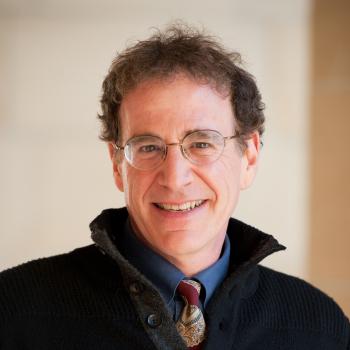
Sam Wineburg

Research

Research Summary: 

Sam Wineburg's work engages questions of identity and history in modern society: how today's Instant Messengerized youth use the past to construct individual and collective identities. Over the last fifteen years his interests have spanned a wide terrain, from how adolescents and professional historians interpret primary sources to issues of teacher assessment and teacher community in the workplace. His book, Historical Thinking and Other Unnatural Acts, won the 2002 Frederic W. Ness Award from the Association of American Colleges and Universities for the book "that best illuminates the goals and practices of a contemporary liberal education." He is the Executive Producer of the new DOE National Clearinghouse for History Education, a collaboration between George Mason University, Stanford, and the American Historical Association.

Current Research: 

Longitudinal study on the development of historical consciousness among adolescents in three communities

PATHS, Promoting Argumentation Through History and Science, an experiment in teaching elementary students to think in sophisticated ways about the connection between history and science

The creation of Web-based environments for learning and teaching history

Research Interests: 
Historical Consciousness
Identity
Cognition in the Humanities
Learning Design
Cognitive Psychology of Interpretation
Social Studies Education
Literacy
Curriculum and Instruction
Development of Historical Consciousness
Teaching and Learning History

Quote

In its deepest forms, historical thinking is neither a natural process nor something that springs automatically from psychological development. Its achievement goes against the grain of how we ordinarily think, one of the reasons why it is much easier to learn names, dates and stories than it is to change the fundamental mental structures we use to grasp the meaning of the past . . . . Mature historical knowing teaches us to go beyond our own image, to go beyond our brief life, and to go beyond the fleeting moment in human history into which we've been born. History educates ("leads outward" in Latin) in the deepest sense. Of the subjects in the secular curriculum it does the best in teaching those virtues once reserved for theology - the virtue of humility, in the face of our limits to know; and the virtue of awe, in the face of the expanse of human history.

- from Historical Thinking and Other Unnatural Acts: Charting the Future of Teaching the Past (Temple University Press, 2001)

Education

  • Stanford, Ph.D., Psychological Studies in Education
  • UC/Berkeley, BA, History of Religion, summa cum laude
  • Brown University

Time at Stanford

Since 2002

Professional Experience

1989-2002- Assistant Professor to Professor, Educational Psychology, & Adjunct Professor of History, University of Washington

1997-98 Visiting Professor, University of Haifa (Israel)

1981-1985- middle school/ high school teacher in a variety of public and parochial settings

Courses Taught

  • Teaching History/Social Studies (Ed 268)
  • History, Memory, and Identity (Ed 356x)
  • Scholarly Writing in Education & the Social Sciences (Ed 385x)

Recent Publications

Historical Thinking and Other Unnatural Acts: Charting the Future of Teaching the Past (Philadelphia: Temple, 2001), http://www.temple.edu/tempress/titles/1518_reg.html;

Knowing, Teaching, and Learning History: National and International Perspectives (with Peter Stearns and Peter Seixas) (New York: NYU, 2001);

"Toward a theory of teacher community." Teachers College Record, 103 (6), 942-1012, 2001 (with Pam Grossman & Steve Woolworth);

"Crazy for History." Journal of American History, March 2004.

Current Activities

Member, Editorial Board, Cognition and Instruction, Journal of the Learning Sciences, World History Connected

Member, Advisory Board, National Research Council Committee, How People Learn, Targeted Report for Teachers

Member, Advisory Board, American Hebrew Academy, Greensboro, North Carolina

Member, Advisory Board, Center for the Study of Historical Consciousness, Univ. of British Columbia, Vancouver, BC

Trustee, National Council for History Education (NCHE)

Consultant, Mandel Foundation, Jerusalem

Faculty & Research

  • Faculty Profiles
  • Faculty Research Interests
  • Faculty Centers
  • SUSE Faculty Open Positions
  • SUSE Open Archive
  • Proposal and Research Resources
  • Resources for Faculty
  • Login
Stanford University School of Education
485 Lasuen Mall, Stanford, CA 94305-3096
Tel: (650) 723-2109
Copyright 2012 Stanford University.
All rights reserved. Terms of use | Copyright Complaints
  • Site Map
  • Contact Us
  • HelpSU
  • SUSE IT
  • AXESS
  • Academic Calendar
  • Stanford Bulletin
  • Office of the Registrar
  • EDmail
  • StanfordWho
  • StanfordYou
  • Login
Connect with us on Facebook Connect with us on Twitter Connect with us on YouTube Connect with us on Flickr

Make a gift now