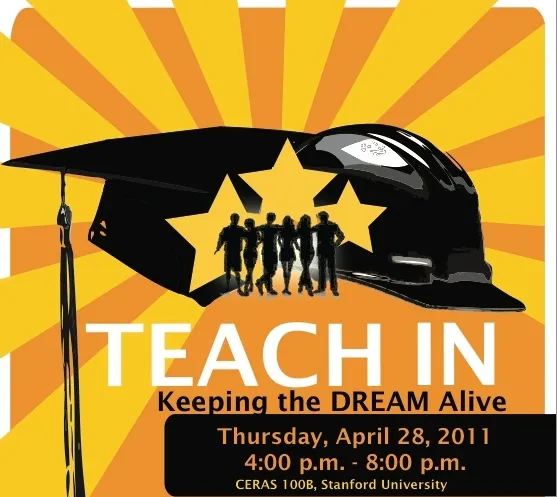
2011 Undocumented Students Teach-In
Members of the Stanford community, community practitioners and advocates
are invited to attend this teach-in to learn of the obstacles and
opportunities undocumented students face as they consider pursuing a
higher education. By providing participants with
context, we hope to open dialogue about how students and community
members can get involved in Keeping the DREAM Alive.
A substantial population of undocumented youth in the United States grow up with legal access to public education through high school, but face legal and economic barriers to higher education. An estimated 80,000 undocumented youth have lived in the U.S. for five or more years by the age of 18, but only 65,000 graduate from high school each year. Research suggests that undocumented students experience shame, anxiety, and fear due to the social stigma and real dangers associated with their status. They also experience invisibility and increased financial constraints in accessing college because they are ineligible to apply for financial aid or student loans.
Dinner served. RSVP now at AB540teachin@gmail.com
SCHEDULE*:
4:15
pm-Panel
1:
Finding
Professional Experience
What
are some obstacles undocumented students encounter when looking for professional
opportunities? What opportunities or alternatives are there for undocumented
students to find a job after college graduation? Join us for a discussion
with students who have been able to develop professional
opportunities.
6:15
pm-Panel
2:
Navigating
Higher Education with Undocumented Status
What
is the process for entering and surviving higher education programs? This
panel will feature a discussion on the higher education topic with students
that have gone into undergraduate and graduate programs, and professional
schools such as law school.
7:30
pm-Closing
Remarks by an advocate for undocumented students
nationwide
Followed by resource tables and dessert.
*If
you cannot stay for the whole event, feel free to come for the part of the teach-in that you can attend.
Sponsored by: Stanford University School of Education; Language, Equity, and Education Policy; Undergraduate Program in Comparative Studies in Race and Ethnicity; Center for Comparative Studies in Race and Ethnicity; Chicano/a Studies; Asian American Graduate Student Association; Stanford Immigrant Rights Project; Hobee's; MEChA de Stanford; Stanford College Prep; El Centro Chicano; Mi Pueblo Food Center; and Educators for Fair Consideration.