Researchers to measure the impact of California’s new ‘science of reading’ law through a multi-year study
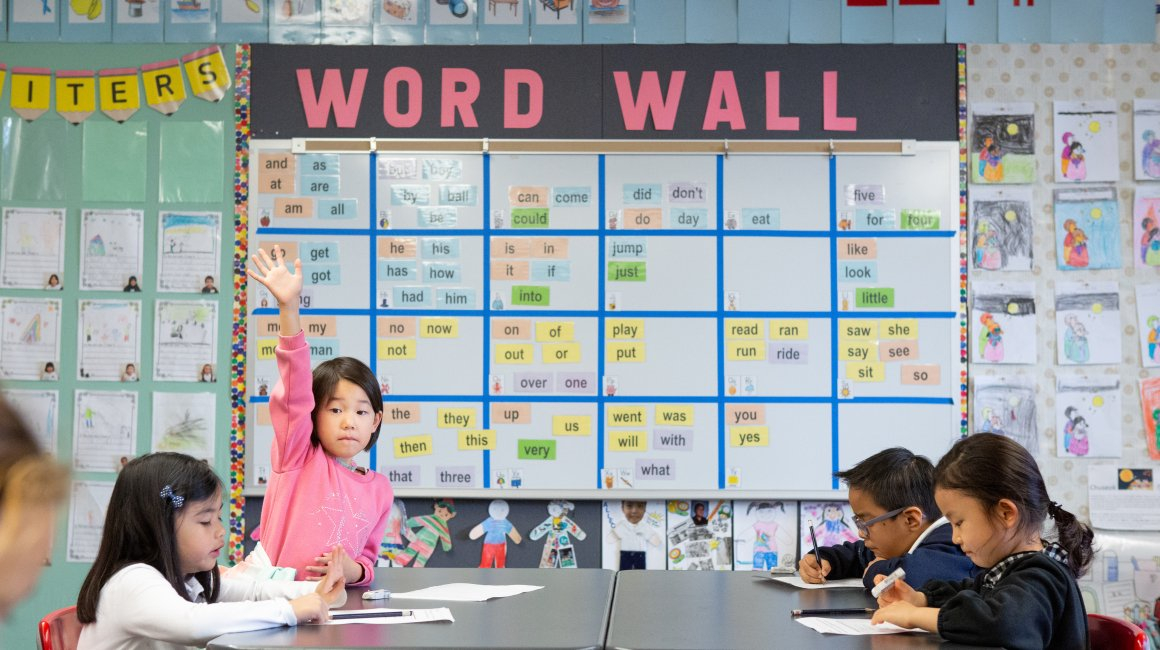
When Assembly Bill 1454 passed unanimously in October 2025, many educators across California rejoiced. At long last, there is now legislation on the books that will align literacy efforts in California under a united vision. Dubbed the state’s “science of reading” bill, California joins a growing list of states that have passed similar legislation to adopt literacy practices grounded in decades of research on how children learn to read. The bill aims to create coordinated, research-based literacy practices that will serve all students, including California's 1.1 million English language learners.
The bill, according to EdSource’s Martha Hernandez, will advance literacy in California in three key ways:
Teacher preparation
Pre-service educators will now be required to be trained in instructional techniques that follow California’s English Language Arts/English Language Development Framework.
Adoption of new instructional materials
Under the new legislation, the State Board of Education will create and maintain a list of curriculum materials that align with evidence-based practices for teaching reading, requiring local districts to either select materials from the approved list or certify that their adopted materials align with the established criteria.
Professional development for current educators
Professional development for current K–5 educators will be provided to ensure they have the necessary skills to teach phonics and the other foundational skills part of the framework. The training will be funded through AB 121, which earmarked $200 million toward such literacy training.
While there is much excitement about the bill—over 90 organizations supported it, and there was no formal opposition at the time of its passage—the state did not include a proposal to document its implementation and measure its impact.
To address this gap, researchers from the USC Rossier School of Education and the Stanford Graduate School of Education will track AB 1454 and AB 121 over a multi-year study of up to five years. With collaborative support from Families in Schools, the California Reading Coalition, and the EdVoice Institute, which is also contributing funding, this team of experts in educational research, literacy and curriculum will organize their work into four strands of study.
They will:
- Document how the state creates the list of approved curriculum materials
- Track how districts adopt the new instructional materials and professional development that goes along with the adoption of the new curriculum.
- Examine how the new curricula are implemented at the district, school and classroom level.
- Document the impact of the new bills on student reading performance, both at the overall level and for specific key groups.
Professor of Education Morgan Polikoff, who co-directs the USC EdPolicy Hub and is the principal investigator on the team, says, “It’s rare to be able to design and carry out research on such a critical policy in real time. Our work has the potential to provide the timely evidence policymakers and practitioners need to ensure AB 1454 successfully moves the needle on literacy in California.”
The ramp-up to implementing the new literacy practices—professional development and selection of instructional materials—will be the team’s focus for the first two years of the study.
One particular area of interest for the group will be documenting how California’s approach to adopting new evidence-aligned curriculum and instructional materials plays out. California is taking a less prescriptive approach than some other states, leaving more control in the hands of local districts and avoiding policies that hold students back for additional remediation if they cannot pass state reading tests. Under the new legislation, districts can either select materials from the state’s approved list or choose their own as long as they align with the established criteria.
“California’s decision to pair local choice with an approved menu of materials represents both an opportunity and an important responsibility,” says Jeimee Estrada-Miller, postdoctoral fellow at USC Rossier and a co-principal investigator. “The state will provide guidance through its list of approved materials and self-certification criteria, and how districts follow that guidance will determine whether AB 1454 translates into meaningful instructional change.”
By year three, the team anticipates that they will begin studying how these new practices and instructional materials are working in the classroom. Through state-wide surveys of teachers, alongside case studies of districts across the state, the researchers will investigate how teachers feel about the new materials and instructional practices; teachers’ familiarity with them; the extent to which they are being used in the classroom; as well as the variations in implementation across the state’s 1,000+ school districts.
By the final year of the study, the team will focus its efforts on examining the impact and measuring the success of the bill. “The laudable goal of this landmark legislation is to ensure that California’s children have the foundational literacy skills they need to thrive academically,” says Thomas Dee, a professor at Stanford University and a co-principal investigator. “However, the success of this large-scale effort is by no means guaranteed. The support and insights provided by our effort are vital both to realizing this vision and to answering critical questions about whether these substantial public investments are working.”
“We designed this project to comprehensively measure both implementation and impact, answering critical questions about what’s working, for whom, and why,” says Polikoff.
The team began work on the study in February 2026. They will report their findings through annual reports and briefings to the public until the study’s conclusion in 2030.
This story was originally published by USC Rossier School of Education.
Faculty mentioned in this article: Thomas S. Dee